
Hurricane preparedness for businesses made simple. Use our hurricane preparedness checklist for business to build your evacuation plan and emergency kit today.
View More
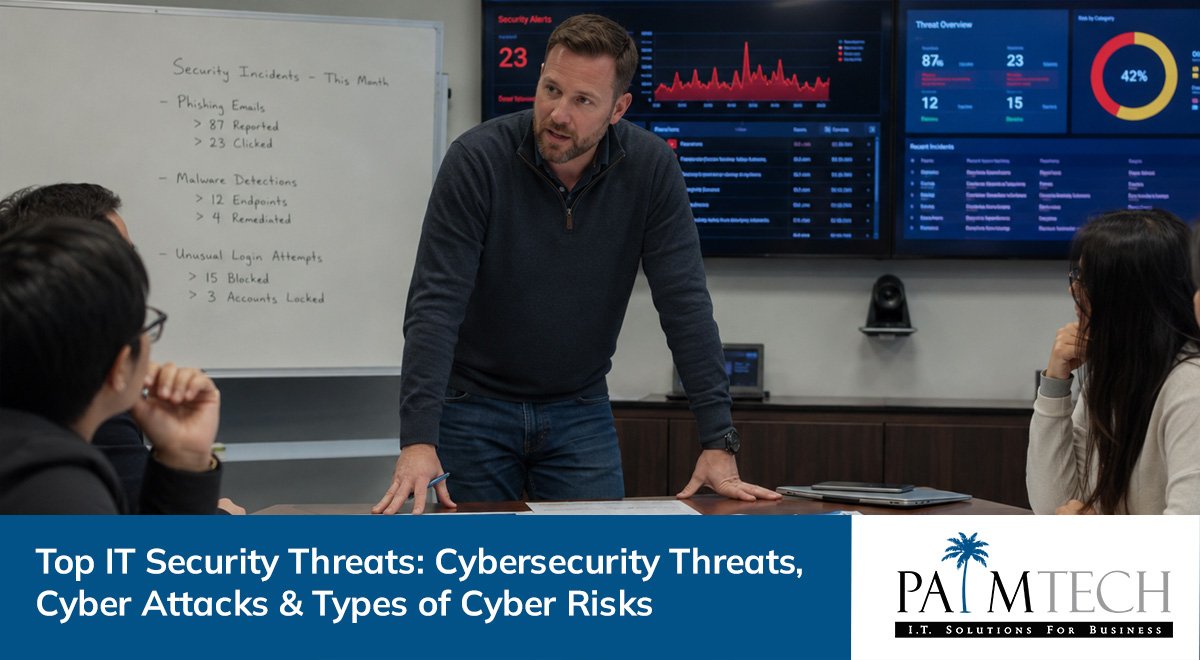

Every business faces IT security threats that can disrupt daily operations and put sensitive information at risk. In this blog, you’ll learn about the most common cybersecurity threats, how cyber attacks happen, and the different types of cyber risks that companies need to watch out for. We’ll also cover practical steps you can take to protect your organization, including how to spot phishing attempts and the importance of strong information security. By the end, you’ll have a clear understanding of how to defend your business and keep your data safe.
IT security threats are dangers that target your computer systems, networks, and data. These threats come in many forms, from malware and ransomware to phishing and insider threats. If not managed properly, they can lead to data breaches, financial losses, and damage to your reputation.
Businesses must stay alert because attackers are always finding new ways to exploit vulnerabilities. Threat actors may use malicious code to access confidential information or disrupt business operations. Even downloading malware from a suspicious email or website can open the door to unauthorized access. That’s why it’s important to understand the basics of IT security threats and how they can impact your organization.

Many organizations make similar mistakes when dealing with IT security threats. Here are some of the most common missteps and why they matter.
Some companies believe that only large businesses are targets. In reality, attackers often go after smaller organizations because they may have weaker defenses. Ignoring cybersecurity threats can leave your systems open to attack and increase the risk of a data breach.
Using simple or repeated passwords makes it easy for attackers to gain access to your systems. Without strong password policies, login credentials can be stolen and used to access sensitive data.
Outdated software can have vulnerabilities that attackers exploit. Regular updates and patches help close these gaps and protect your network from new threats.
If your team doesn’t know how to spot phishing attacks or social engineering tactics, they might accidentally share sensitive information. Training helps everyone recognize warning signs and avoid falling for scams.
Without a clear plan, your business may not react quickly to a security incident. This can lead to more damage and longer recovery times. Having an incident response plan ensures everyone knows what to do if something goes wrong.
Vendors and partners can introduce vulnerabilities if their security isn’t strong. Always check that third-party providers follow proper security practices to protect your data.
A solid IT security strategy should include these important features:
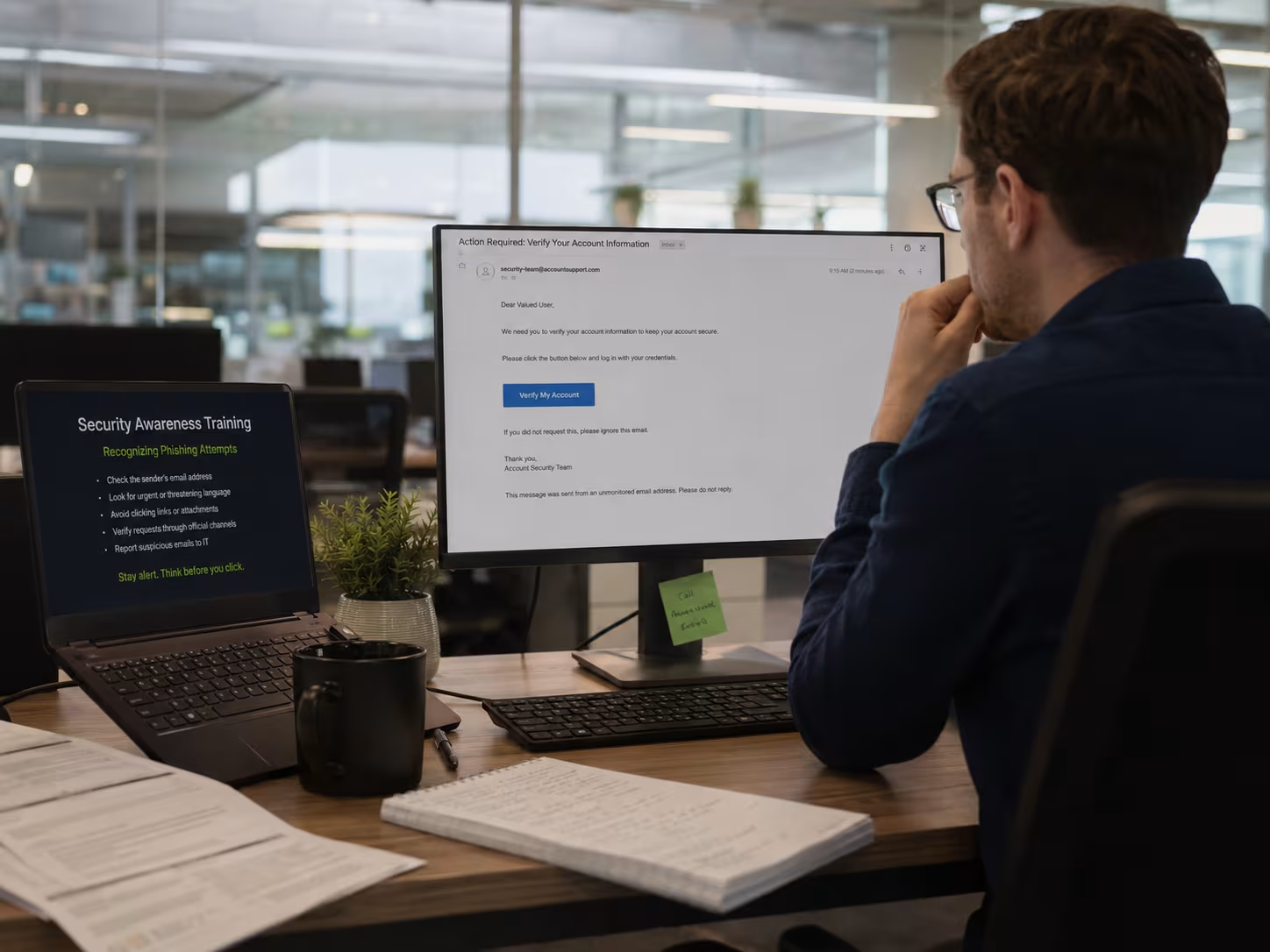
IT security threats can seriously disrupt your business operations. When attackers gain unauthorized access to your systems, they can steal sensitive data, encrypt files for ransom, or even shut down your servers. This can lead to lost revenue, damaged customer trust, and costly recovery efforts.
A single data breach can also expose confidential information, putting your clients and employees at risk. It’s not just about the immediate damage—long-term effects can include legal penalties and a damaged reputation. That’s why it’s critical to have strong information security measures in place and to regularly review your security policies.
Protecting your business from IT security threats takes a multi-layered approach. Here are some key strategies to consider.
Anti-malware software helps detect and remove malicious code before it can cause harm. Make sure your systems are always running the latest version to catch new threats.
Not all threats come from outside. Employees or contractors with access to sensitive data can sometimes misuse it. Monitoring user activity and setting clear access controls can help reduce this risk.
Encryption turns your data into unreadable code, making it much harder for attackers to use if they gain access. This is especially important for confidential information and sensitive data stored on servers or in the cloud.
Keeping your software and operating systems up to date helps close security gaps. Set up automatic updates where possible to make sure you don’t miss critical patches.
Only give vendors and partners the access they need to do their jobs. Review permissions regularly and remove access when it’s no longer needed.
DDoS attacks can overwhelm your network and disrupt your services. Using specialized tools and working with your internet provider can help you detect and respond to these attacks quickly.

Putting IT security measures in place doesn’t have to be complicated. Start by assessing your current risks and identifying areas where your defenses are weak. This might include reviewing who has access to sensitive information, checking for outdated software, or testing your incident response plan.
Next, focus on employee training. Make sure everyone knows how to spot phishing attempts and understands the importance of not sharing sensitive data. Regularly back up your data and test your recovery process so you’re ready if something goes wrong. Finally, stay informed about new threats by subscribing to threat intelligence updates and working with trusted IT partners.
Following these best practices can help lower your risk of IT security threats:
Taking these steps will help protect your business and keep your information secure.
Are you the decision-maker for a growing business looking to improve your security? If you’re expanding and want to make sure your data and operations are protected, we can help. Our team understands the unique challenges that come with growth, and we’re ready to support you every step of the way.
We know that IT security threats are always changing, and it can be tough to keep up. That’s why Palm Tech offers practical solutions tailored to your needs. Reach out to us today to learn how we can help you defend your business and keep your information safe.
Businesses often face threats like phishing attacks and ransomware, which can lead to data breaches or loss of sensitive information. Attackers use these methods to trick employees or exploit vulnerabilities in your systems.
Keeping your software updated and training your team to spot suspicious emails can help reduce the risk. Regular risk assessments and strong information security policies are also important for protecting your business.
Malware can disrupt business operations by infecting servers, stealing confidential information, or encrypting files for ransom. Even a single malware attack can cause downtime and financial losses.
To prevent this, use reliable anti-malware tools and avoid downloading malware from unknown sources. Regularly backing up your data and monitoring for malicious activity can also help keep your business running smoothly.
Start by using a strong firewall and keeping your DNS settings secure. Limiting unauthorized access and regularly updating your systems are key steps in preventing attacks.
Employee training is also important. Teach your team how to spot signs of a cyber attack and encourage them to report anything suspicious right away.
Phishing attempts often involve fraudulent emails or messages that try to trick you into sharing sensitive data or login credentials. Look for signs like urgent requests, unfamiliar senders, or suspicious links.
If you’re unsure about a message, don’t click any links or download attachments. Instead, verify the sender and report the attempt to your IT team to help prevent a data breach.
There are many types of cyber threats, including distributed denial-of-service attacks, insider threats, and exploit vulnerabilities. Each type targets different parts of your network or data.
Understanding these threats helps you build better defenses. Regularly review your security policies and stay informed about new risks to keep your business protected.
Social engineering tricks employees into sharing sensitive information or giving attackers access to your systems. It relies on manipulating people rather than breaking through technical defenses.
Training your team to recognize these tactics and encouraging them to be cautious with confidential information can help reduce the risk. Always verify requests for sensitive data, even if they seem to come from trusted sources.

Hurricane preparedness for businesses made simple. Use our hurricane preparedness checklist for business to build your evacuation plan and emergency kit today.
View More

Discover the benefits of VoIP for business and see how VoIP vs landline for business compares. Learn how VoIP phone systems can boost efficiency and cut costs.
View More