
Learn how to spot a phishing email effectively. This article reveals key tactics scammers.
View More

Annual security awareness training rarely leads to lasting behavior change. Shorter, more frequent sessions do more to keep employees alert and reduce the risk of costly mistakes.
Picture a employee opening what looks like an invoice from a trusted vendor, clicking without a second thought, and handing an attacker the keys to the network. That single click is what one annual training session is supposed to prevent, and often doesn't.
Annual sessions check a regulatory box, but checking a box and changing behavior are two different things. Employees forget details within weeks, and best practices fade as the months stretch on. The underlying problem is simple: behavioral change in security depends on regular reminders, not just one-time events.
That gap between good intentions and daily habit shows up in the numbers, too. A survey found that 80% of organizations update their security awareness training content at least once a year, but most still rely on yearly sessions to deliver it. Updating the material does little good if staff only encounter it once, leaving long stretches where new threats go unanswered.
So the fix isn't more content once a year—it's rethinking when and how that content reaches employees in the first place.

Many businesses stick with yearly security awareness training because it feels efficient. It satisfies auditors and checks the compliance requirement, yet satisfying an auditor isn't the same as stopping an attacker.
Once employees hear about cybersecurity only once a year, the information fades fast, and attackers aren't standing still while it does. Tactics shift constantly, so by the time the next annual session arrives, much of what staff learned is outdated or simply forgotten.
That gap between sessions is exactly where trouble gets in: employees become more likely to fall for phishing emails, reuse weak passwords, or mishandle sensitive data. The business stays compliant on paper while remaining exposed in practice.
Shorter, more frequent sessions close that gap by keeping security top of mind rather than a once-a-year memory. Employees are more likely to recognize a suspicious email or an odd request for confidential information when the lesson is recent rather than months old. That shift, from annual event to ongoing habit, is often what separates a near-miss from a costly breach.
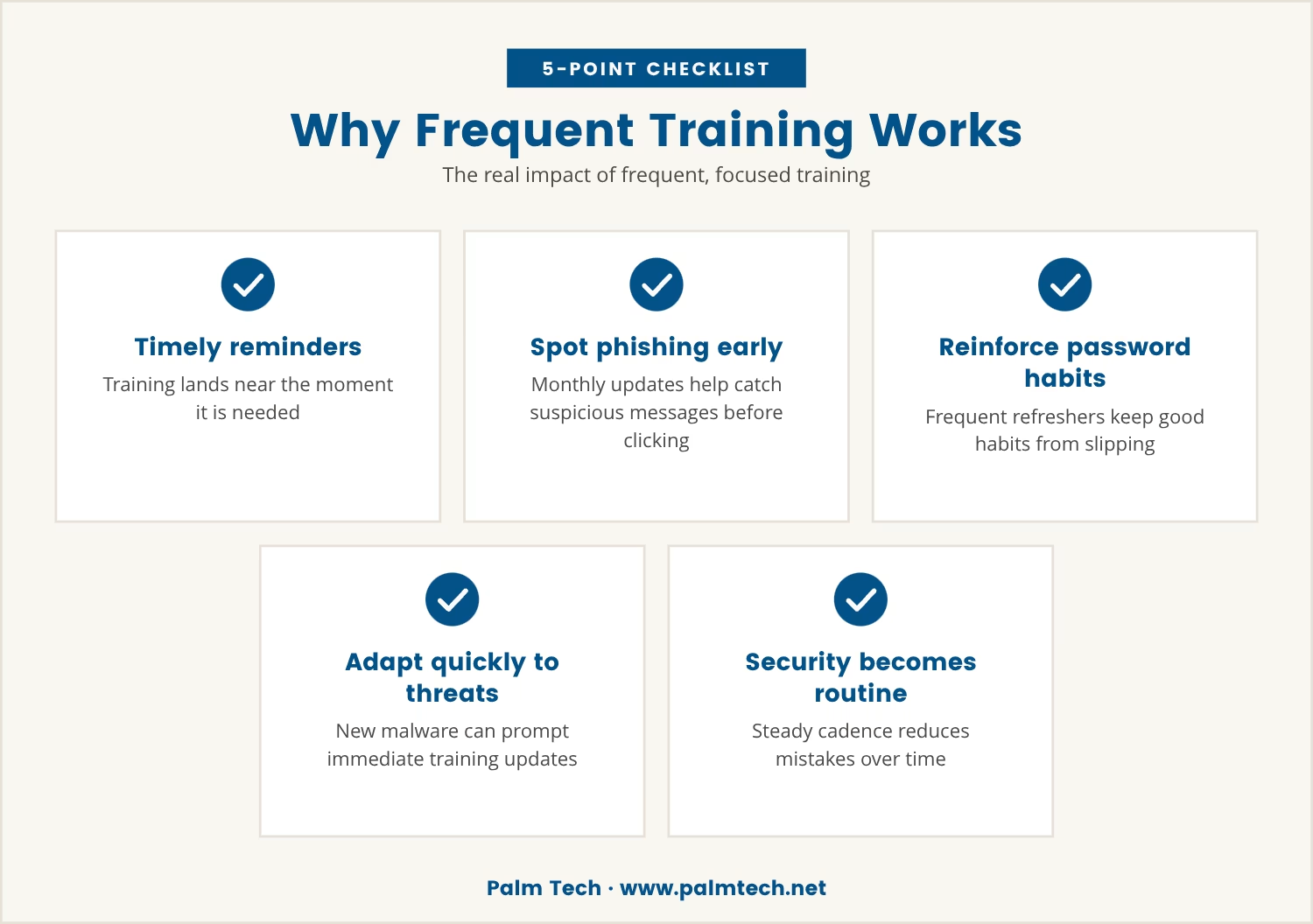
Delivering security awareness topics in smaller, regular doses changes how employees actually respond when a threat shows up. Because training is ongoing, the reminder arrives close to the moment it's needed instead of months before it.
A quick monthly update on current phishing scams, for instance, gives employees a chance to spot a suspicious message before they click. A short refresher on password habits every few weeks keeps those habits from slipping.
That same rhythm also makes a security program easier to adapt. If a new strain of malware starts circulating, the training can be updated right away rather than waiting for the next scheduled session months out.
Over time, this steady cadence builds a culture where security belongs to daily work rather than to one date on the calendar, which in turn means fewer mistakes and a sturdier defense against the threats that keep evolving.
Picking the right security awareness training topics matters as much as how often they're delivered. Businesses in West Palm Beach face the same core risks as companies anywhere—phishing, ransomware, social engineering—so how employees are taught to handle them is what makes the real difference.
Key topics that benefit from regular reinforcement include:
Rotating these topics across the year keeps the knowledge current instead of letting any one lesson go stale, so the team can respond with confidence when a real threat actually appears.
Short, focused training sessions outperform long annual lectures at changing habits. A few reasons explain why.
People retain more when information arrives in small, manageable pieces. Short sessions fit into busy schedules and hold attention instead of losing it halfway through.
Because employees hear key messages on a regular cadence, those ideas settle into routine. That repetition is what turns a good practice into something automatic.
Frequent training means a new risk doesn't have to wait for the calendar. The moment a new phishing tactic surfaces, the team can be alerted directly.
Employees finish short sessions far more often than long ones, and higher participation simply means more people ready to catch a threat before it lands.
Regular sessions also open a regular channel for feedback, so topics can be adjusted toward whatever employees actually find useful.
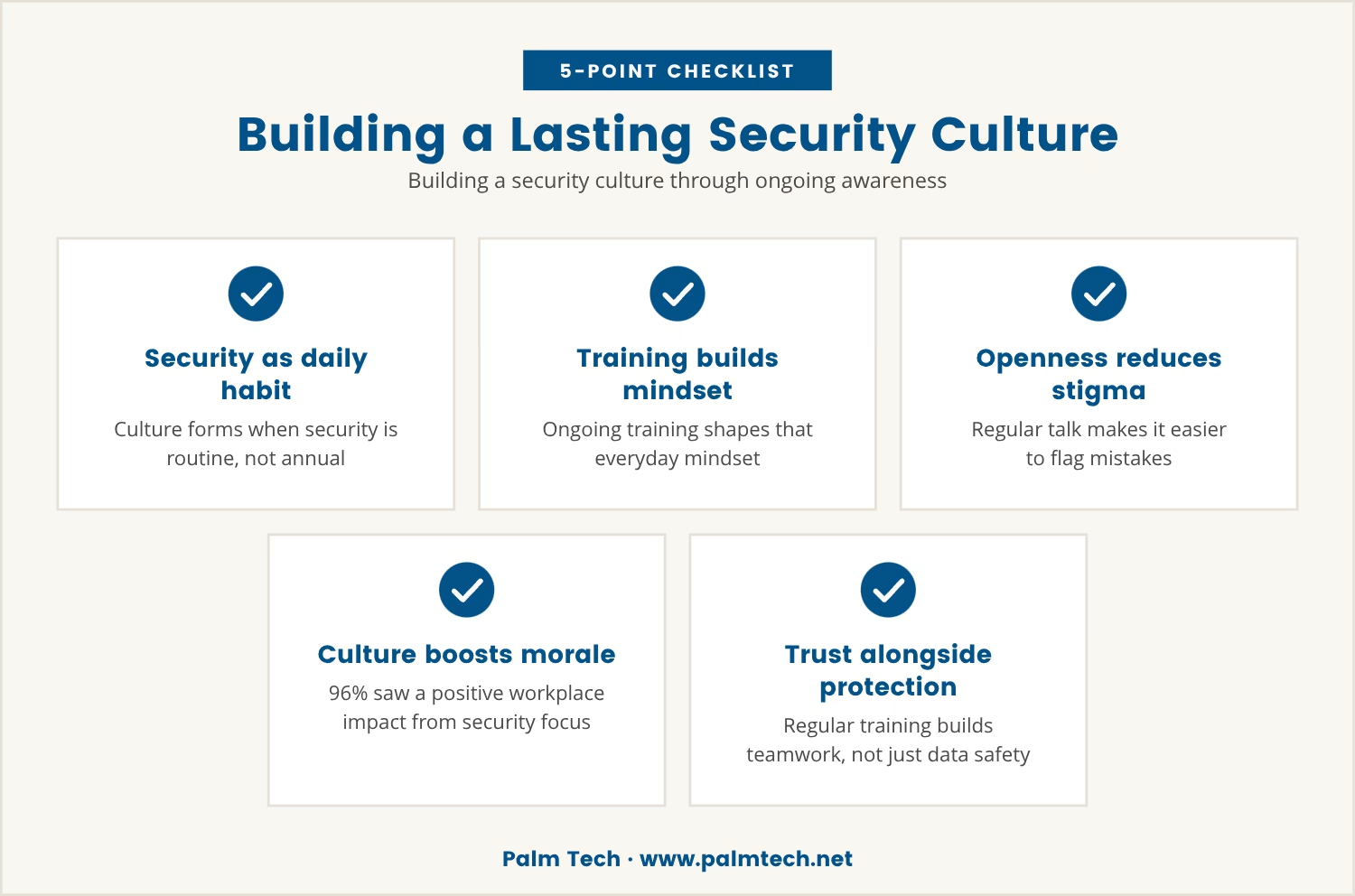
A strong security culture doesn't form overnight; it takes shape once employees treat security as part of the everyday job rather than a once-a-year obligation.
Ongoing training is what builds that mindset. As staff talk about cybersecurity more regularly, they grow more comfortable asking questions and flagging suspicious activity, which lowers the stigma around admitting a mistake and lets everyone learn from what went wrong.
That openness has measurable upside: one survey found that 96% of organizations saw a positive impact on their workplace atmosphere after focusing on security culture. So regular training isn't only protecting data—it's also building trust and teamwork along the way.
To gauge where a team actually stands, ask: do employees talk openly about risks, or do they stay quiet until something's already gone wrong?
Some companies hold onto annual training because they worry about the time, cost, or pushback that comes with a change, but those concerns usually resolve faster than expected.
Shorter sessions delivered online slot easily into a busy schedule, and many platforms track participation while tailoring content to a given team. Set against the cost of ongoing training, cleaning up after a data breach is almost always the pricier outcome.
Employees tend to welcome the change, too: short, relevant updates feel more useful than one long yearly lecture, and once staff see the training actually helping them dodge real threats, they stay engaged with it.
Meeting compliance requirements matters, but it can't be the only goal of a security awareness program, because real protection depends on changing how people think and act day to day.
Relying only on annual sessions might mean passing the next audit while carrying the same risks as before, and attackers don't wait for a training schedule—they look for whatever gap is open.
Making security awareness a regular part of the business is what closes that gap and builds a safer environment all around, with the payoff showing up as fewer incidents, less downtime, and more peace of mind.

Many businesses with 25 to 150 employees find themselves stuck with annual security training that checks the box but doesn’t truly protect them. At Palm Tech, we understand how easy it is to fall into this pattern and how risky those long gaps can be.
If you’re ready to see how regular, focused training can make a difference, let’s talk about your current approach and how we help teams stay alert all year.
Get started with Palm Tech and pay no onboarding fees, plus benefit from our 90-day no-lock-in guarantee for qualifying businesses.
Start with zero onboarding fees
Vary the format and length of sessions, mixing in short videos, quizzes, and real-world examples to keep attention from drifting. Interactive content helps employees retain key points far better than a long lecture does.
Encourage strong, unique passwords alongside multi-factor authentication. Regular prompts to update passwords and avoid reusing them across accounts help turn good habits into lasting ones.
Review and refresh training topics at least every few months so the content keeps pace with new threats and best practices. Frequent updates keep employees prepared for whatever risk emerges next.
Yes. Short, focused sessions delivered regularly help employees remember the right response in a risky moment, and that repetition makes a costly mistake far less likely.
Cover device security, safe use of public Wi-Fi, and how to spot phishing attempts. Remote employees should also be reminded to keep software updated and avoid sharing sensitive information over unsecured channels.
Learn how to spot a phishing email effectively. This article reveals key tactics scammers.
View More
Discover how insider threats often bypass monitoring systems. Learn effective strategies to prevent insider threats and protect your sensitive data.
View More